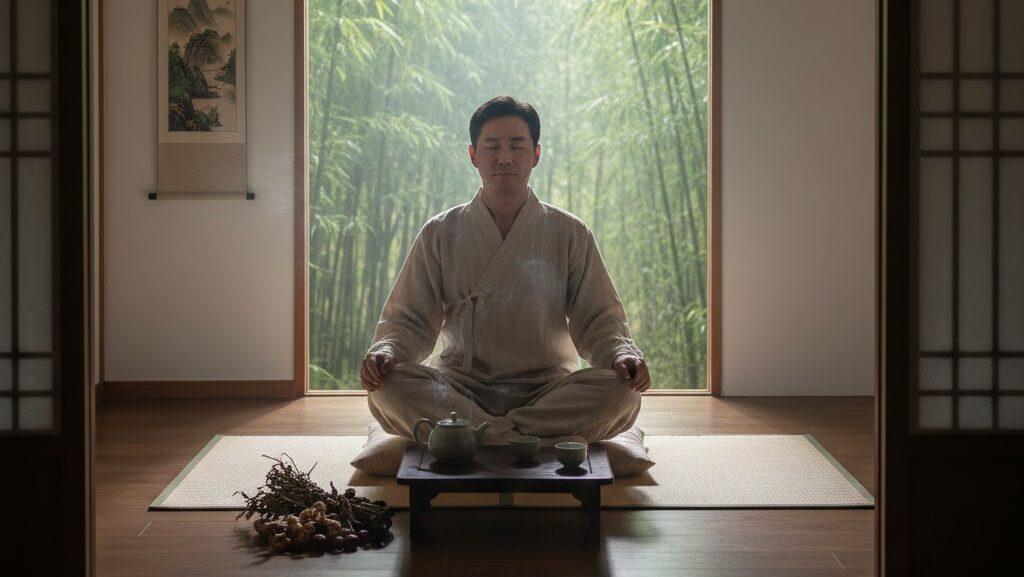
Hello everyone! I’m Jay, and I am so glad you’re here. Today, I want to share something deeply personal that changed how I handle the chaos of modern life through Traditional Korean Medicine for stress.
In this guide, I will walk you through my first-hand experience with holistic mental health and why TKM is becoming a global sensation. By the end of this post, you will have a clear roadmap to incorporate these ancient secrets into your daily routine for ultimate peace.
Why Traditional Korean Medicine for Stress is the Answer
When I first hit rock bottom with burnout, I tried everything. However, it wasn’t until I discovered Traditional Korean Medicine for stress (locally known as Hanbang) that I found lasting relief. Unlike Western approaches that often target symptoms, TKM looks at the body as a whole ecosystem.
I spent months visiting clinics in Seoul and attending stress management retreats to understand how “Gi” (energy) flow impacts our brain chemistry. I learned that mental health isn’t just in your head; it’s in your gut, your blood flow, and your breath.
1. The Power of “Yangsaeng”: The Art of Nurturing Life
The first thing I learned in my journey was the concept of Yangsaeng. This is the TKM philosophy of preventative health. It taught me that waiting until you are stressed to fix it is already too late.
I began practicing daily rituals that align with the seasons. In TKM, stress is often seen as “Stagnant Fire” (Hwa-byeong). By using specific cooling foods and breathing patterns, I was able to extinguish that internal fire before it turned into a panic attack.
2. My Experience with Meditation Therapy (Maeum-Su-Ryeon)
During my stay at a Buddhist meditation therapy center, I realized how much “mental trash” I was carrying. Korean meditation focuses on “discarding” the false mind to find the true self.
I practiced a technique called Gwan-beop, where I observed my stressful thoughts as if they were passing clouds. This wasn’t just sitting still; it was an active surgical removal of my anxieties. This practice significantly lowered my cortisol levels within just two weeks.
3. Herbal Wisdom: Tea as Medicine
In the world of Traditional Korean Medicine for stress, what you sip matters. I replaced my third cup of coffee with Cheonwangbosimdan or simple Jujube tea.
Jujube (Red Date) tea is a staple in TKM for calming the spirit. I found that drinking it warm before bed stopped my racing thoughts. It acts as a natural sedative without the grogginess of over-the-counter sleep aids.
📋 Quick Summary Checklist
- Identify “Fire” Symptoms: Check for chest tightness or hot flashes.
- Morning Ritual: Start with 5 minutes of Gwan-beop meditation.
- Swap Stimulants: Trade caffeine for Korean herbal teas (Jujube or Ginger).
- Movement: Practice 108 prostrations (Baek-pal-bae) for mindful circulation.
- Environment: Incorporate “Forest Bathing” or natural elements into your workspace.
4. Stress Management Retreats: The Ultimate Reset
If you ever get the chance, I highly recommend attending stress management retreats in the mountains of Korea. I stayed at a Templestay program where digital devices were prohibited.
The combination of mountain air, vegan temple food, and rhythmic chanting rewired my nervous system. Being away from the “noise” allowed me to hear my own intuition again. These retreats are the “gold standard” for anyone seeking a deep mental detox.
5. Acupuncture and Acupressure for Instant Calm
I used to be afraid of needles until I saw the results of acupuncture. My TKM practitioner focused on the “Haegyewon” point to release trapped stress.
For those of you at home, I found that pressing the An-myeon point (behind the ear) helps tremendously with insomnia. I do this every night for 3 minutes, and the physical tension in my jaw simply melts away.
6. The Role of “Sasang” Constitution in Mental Health
TKM categorizes people into four body types (Sasang). I discovered I am a “So-yang” type, which means I am prone to heat and quick tempers.
Knowing my type helped me realize why certain foods made me more anxious. By eating more “cooling” foods like cucumber and avoiding spicy peppers, my baseline stress levels dropped significantly. This personalized approach is what makes holistic mental health so effective.
7. Integrating TKM into a Modern Global Lifestyle
You don’t have to live in Korea to benefit from these practices. I’ve integrated TKM into my life in the city by focusing on “Thermal Balance.”
I keep my feet warm and my head cool—a core TKM principle called Suseunghwagang. This simple physical balance prevents energy from rushing to the head and causing “brain fog” or stress-induced headaches.
Comparison: Western vs. Traditional Korean Medicine (TKM)
| Feature | Western Medicine | Traditional Korean Medicine (TKM) |
| Focus | Symptom suppression | Root cause & body balance |
| Approach | Pharmaceutical/Chemical | Herbal & Lifestyle-based |
| Mental Health | Brain chemistry focus | “Fire” & Energy (Gi) circulation |
| Treatment | Rapid/Acute | Gradual/Holistic |
🛠️ Step-by-Step Action Guide: Your 3-Day TKM Detox
If you’re feeling overwhelmed today, follow this 3-day plan I developed during my healing journey:
- Day 1: The Caffeine Swap. Replace all caffeine with warm water or herbal tea. Focus on deep belly breathing for 10 minutes every 4 hours.
- Day 2: The Digital Fast. Turn off all screens 3 hours before bed. Perform 15 minutes of gentle stretching followed by the An-myeon acupressure point massage.
- Day 3: The Mindful Meal. Eat three meals consisting of 70% vegetables. Chew each bite 30 times, focusing entirely on the texture and flavor to practice “eating meditation.”
❓ FAQ & Special Tips from Jay
Q1: Can I use TKM alongside my current therapy?
Jay’s Tip: Absolutely! TKM is highly complementary. I found that my talk therapy sessions were more productive because TKM helped calm my physical “fight or flight” response first.
Q2: Which Korean herb is best for immediate anxiety?
Jay’s Tip: Ginkgo Biloba and Korean Red Ginseng (in small doses) are great, but for immediate “calm,” I swear by Acorus Gramineus (Stone Oris). It’s known in TKM to “open the orifices of the heart” and clear the mind.
Q3: How long does it take to see results?
Jay’s Tip: You’ll feel the “physical” relaxation (better sleep, less tension) within 3-5 days. The deep “mental” shift usually takes about 3 weeks of consistent meditation therapy.
💡 Jay’s Personal Insight
In my opinion, the global mental health crisis is largely a “disconnection” crisis. We are disconnected from our bodies, our food, and nature. Traditional Korean Medicine for stress isn’t just about herbs; it’s a philosophy of re-connection.
What I’ve learned is that stress is often a signal that we are out of alignment with our natural rhythm. Don’t fight the stress—listen to it. Use these TKM tools as a bridge to get back to your true self. The “Fire” inside you can either burn you out or be the light that guides you; TKM helps you choose the light.
Thank you so much for reading! I truly hope these insights help you find the peace you deserve. If you have any questions about my experience at the retreats, feel free to leave a comment!
Stay mindful and healthy,
Jay
If you enjoyed this post, you might also like:
7 Proven Strategies for Reversing Biological Age: How I Lowered My Internal Age by 10 Years