While I spent years mastering a 10% annual return in the stock market, I realized that my health was the one asset I couldn’t afford to mismanage. I began my deep dive into the Korean Longevity Diet after witnessing my own family members maintain sharp minds and active bodies well into their 90s. This post is a personal account of how embracing these ancient culinary traditions revolutionized my physical and mental performance.
1. My Gut Health Transformation Through Fermentation
The core of my experience with the traditional Korean diet began with a focus on fermentation. I used to suffer from chronic digestive fatigue, but introducing Kimchi and Doenjang (soybean paste) into my daily routine acted like a natural reset button for my gut microbiome. These living probiotics are essential pillars of the Korean Longevity Diet that provide more than just flavor; they provide life.
I noticed a significant improvement in my mental clarity almost immediately after my digestion stabilized. In the world of high-stakes investing, a clear mind is your most valuable tool, and I owe mine to these fermented superfoods. I now view my refrigerator not just as food storage, but as a biological “savings account” for my future health.
2. The Art of the ‘Bansang’ Structure
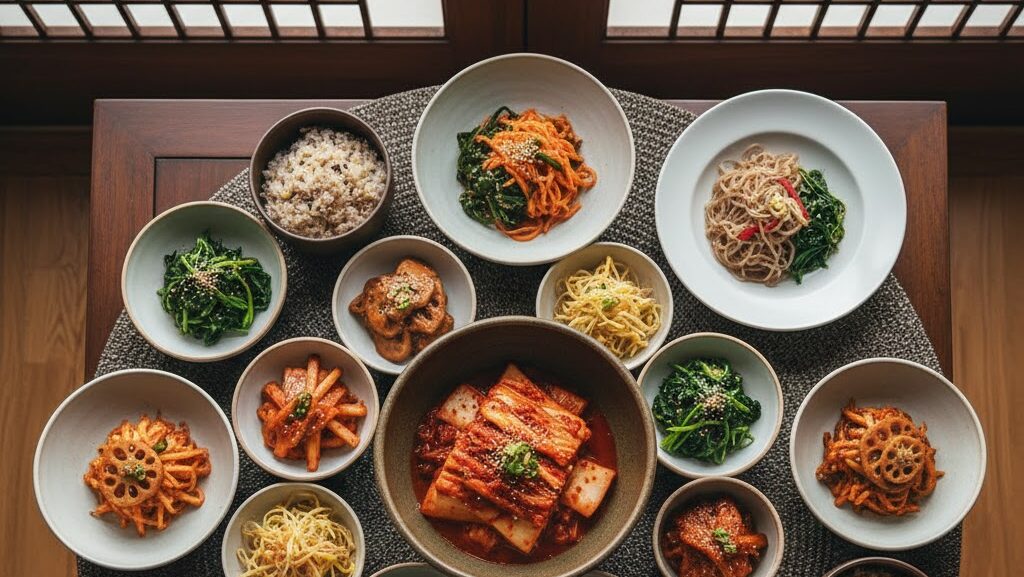
In the West, we often eat one large “main” dish, but the Korean way is about variety through ‘Bansang.’ This structure allows me to consume a wide spectrum of phytonutrients and minerals in every single meal. By having 5 to 7 different small side dishes (Banchan), I ensure that my body receives a diverse nutritional profile that a single steak or pasta dish simply cannot provide.
3. Why I Chose ‘Namul’ Over Processed Greens
I replaced my standard salads with Korean ‘Namul’—seasoned wild greens and vegetables that are lightly blanched. This method of cooking makes the fiber easier to digest while preserving the delicate vitamins. I personally found that seasoning these with perilla oil (rich in Omega-3) helped reduce inflammation in my joints, allowing me to stay active even during long hours of market analysis.
✅ Quick Summary Checklist
- Daily Probiotics: Eat at least one serving of Kimchi or fermented paste daily.
- Grain Diversity: Swap white rice for a mix of brown rice, barley, and beans.
- Vegetable Variety: Aim for at least 5 different colors on your table.
- Smart Cooking: Prioritize steaming, blanching, and fermenting over frying.
- Hydration: Replace sugary drinks with roasted grain teas like barley tea.
4. Satiety Without the Sugar Crash
One of the most profound changes I experienced was the stabilization of my blood sugar. The high fiber content of the Korean Longevity Diet ensures that energy is released slowly into the bloodstream. I no longer experience the dreaded “afternoon slump” that used to plague my productivity.
Instead of heavy sauces, I use fermented seasonings like Ganjang (soy sauce) and Gochujang (red chili paste). These provide deep “umami” flavors without the hidden sugars found in many Western condiments. I’ve found that this shift helped me shed unwanted weight without ever feeling like I was on a restrictive “diet.”
5. Longevity is a Long-Term Investment
I treat my body like a blue-chip stock—I invest in it every day and wait for the compound interest of health to build up. The Korean approach to longevity isn’t a “bio-hack” or a temporary trend; it is a philosophy of living in harmony with nature. By eating seasonally and focusing on ingredients that have been aged over time, I am building a foundation for a long and vibrant life.
Step-by-Step Action Guide: How to Start Your Longevity Journey
- The Morning Tea Ritual: Start your day with warm barley tea (Boricha) to awaken your digestive system without the acidity of coffee.
- The 2:1 Vegetable Ratio: For every bite of protein or grain, ensure you take two bites of seasoned vegetables (Namul).
- Introduce Doenjang: Replace your usual salt or stock cubes with a spoonful of fermented soybean paste for a probiotic boost in your soups.
- Mindful Chewing: Traditional Korean meals are complex in texture; I make it a point to chew each bite 30 times to aid digestion and enjoy the flavors.
Frequently Asked Questions (FAQ)
Q: Is Korean food too spicy for someone with a sensitive stomach?
A: Not at all. While Gochujang is famous, the true Korean Longevity Diet relies heavily on non-spicy fermented foods and blanched vegetables. You can easily adjust the heat to your preference.
Q: Where can I find these ingredients if I don’t live in Korea?
A: Most ingredients like Kimchi, Doenjang, and dried greens are now available in the international section of local supermarkets or through online retailers. I personally order high-quality fermented pastes to ensure I get the best probiotic benefit.
Q: Can this diet help with weight loss?
A: In my experience, yes. Because the diet is so high in fiber and low in processed sugars, many people find they reach their natural weight without calorie counting.
Conclusion: My Final Thoughts on Health and Wealth
In my years of investing, I’ve learned that the greatest return on investment comes from the choices we make at the dinner table. The Korean Longevity Diet has given me the stamina to pursue my financial goals and the health to enjoy the results. I encourage you to start with just one small change—perhaps a jar of Kimchi—and see how your body responds to this ancient wisdom.
Looking back on my journey of balancing financial growth with physical longevity, I’ve realized that the most profitable investment we can ever make is in our own well-being. The Korean Longevity Diet hasn’t just changed what’s on my plate; it has transformed my energy, my focus, and my perspective on a long, fulfilling life.
I hope my personal experiences inspire you to take that first small step toward a healthier lifestyle today. Whether it’s adding a side of Kimchi or trying a new fermented dish, remember that small, consistent choices compound over time—just like a great investment portfolio.
Thank you for joining me in this exploration of traditional wisdom. I would love to hear your thoughts or any questions you have about starting your own K-wellness journey. Let’s grow both our health and our wealth together!
Best regards, Jay
If you enjoyed this post, you might also like: 5 Korean Fermented Foods That Transformed My Microbiome Health