Hello everyone, it’s Jay! I am thrilled to welcome you to the first post in our skin longevity series.
If you have ever wondered how to achieve that luminous glow, the Glass Skin Diet is the foundation you’ve been looking for. In this article, I will explain how traditional Korean ingredients work at a cellular level to preserve your youth.
Why I Switched from Creams to the Glass Skin Diet
For years, I spent a fortune on expensive serums, but my skin never truly looked “alive” until I changed what I ate. I realized that topical treatments can only do so much if your body lacks the building blocks for repair. By focusing on a collagen-rich, anti-inflammatory diet, I saw a dramatic shift in my skin’s texture and resilience.
Decoding the Glass Skin Diet: Science and Tradition
The term “Glass Skin” refers to a complexion so clear and hydrated it resembles glass. The secret lies in the Korean philosophy of Yaksun—food as medicine.
- Collagen Synthesis: Certain foods provide the amino acids (proline, glycine) needed to build new skin.
- Antioxidant Protection: Traditional spices prevent “inflammaging,” the internal fire that destroys collagen.
- Hydration from Within: High-water content vegetables in Korean cuisine ensure deep cellular hydration.
The Role of Fermentation in Skin Longevity
As we discussed in my previous post about Kimchi, fermentation is key to gut health. But did you know there is a “gut-skin axis”? When my gut is happy, my skin reflects that harmony with fewer breakouts and more glow.
✅ Quick Summary Checklist
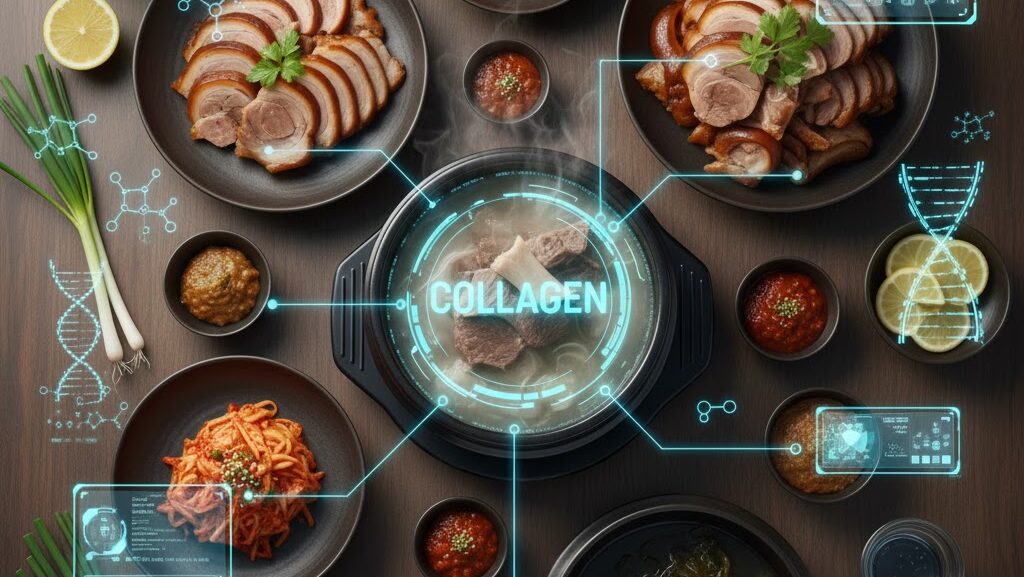
- Bone Broth: Drink one bowl of Seolleongtang (ox bone soup) weekly for pure collagen.
- Seaweed: Incorporate Miyeok (seaweed) to detoxify the blood and mineralize skin.
- Fermented Soy: Eat Doenjang for isoflavones that mimic estrogen’s skin-plumping effects.
- Vitamin C: Always pair collagen foods with Vitamin C (like radish or sprouts) for absorption.
My Top 3 Collagen-Boosting Korean Superfoods
Through my research and personal testing, I’ve found these three to be the most effective.
- Gomtang (Long-simmered Bone Broth): This is nature’s Botox; it’s packed with gelatin and minerals that support the skin barrier.
- Miyeok-guk (Seaweed Soup): Known as the “post-birth recovery food,” its high iodine and calcium content are vital for skin cell turnover.
- Jokbal (Braised Pig’s Trotters): While indulgent, this is a traditional favorite in Korea for those seeking a massive dose of dietary collagen.
Step-by-Step Action Guide: Starting Your Skin Transformation
- Step 1: Eliminate Sugar. High sugar causes glycation, which makes your collagen brittle and yellow.
- Step 2: Add a Fermented Side. Include a serving of Kimchi or pickled vegetables with every lunch to support the gut-skin axis.
- Step 3: Brew Barley Tea. Swap coffee for Bori-cha (barley tea) to improve blood circulation and skin oxygenation.
- Step 4: Consistency is Key. Give the Glass Skin Diet at least 28 days—the length of a full skin cell cycle—to see results.
FAQ: Common Questions about the Glass Skin Diet
- Q: Can I just take collagen supplements instead?
- A: Supplements help, but the bio-availability of collagen in whole foods like bone broth is often superior due to the presence of co-factors.
- Q: Is the diet suitable for vegetarians?
- A: Yes! Focus on soy-based collagen boosters like Tofu and fermented beans (Cheonggukjang) which are rich in skin-saving amino acids.
- Q: How soon will I see a “glow”?
- A: Most of my followers (and myself) notice improved hydration within 2 weeks and better elasticity after a month.
Closing Thoughts: Beauty is an Inside Job
Thank you for joining me on this journey into K-Skin Longevity & Science. I truly believe that the Glass Skin Diet is not a temporary trend, but a lifestyle that honors your body’s natural wisdom.
I can’t wait to hear about your progress. Stay beautiful and healthy!
Warm regards, Jay
If you enjoyed this post, you might also like: The Science of Kimchi: Why It’s the Ultimate Superfood for Your Gut