Hello there! I’m Jay, and I’m thrilled to share some transformative insights with you today.
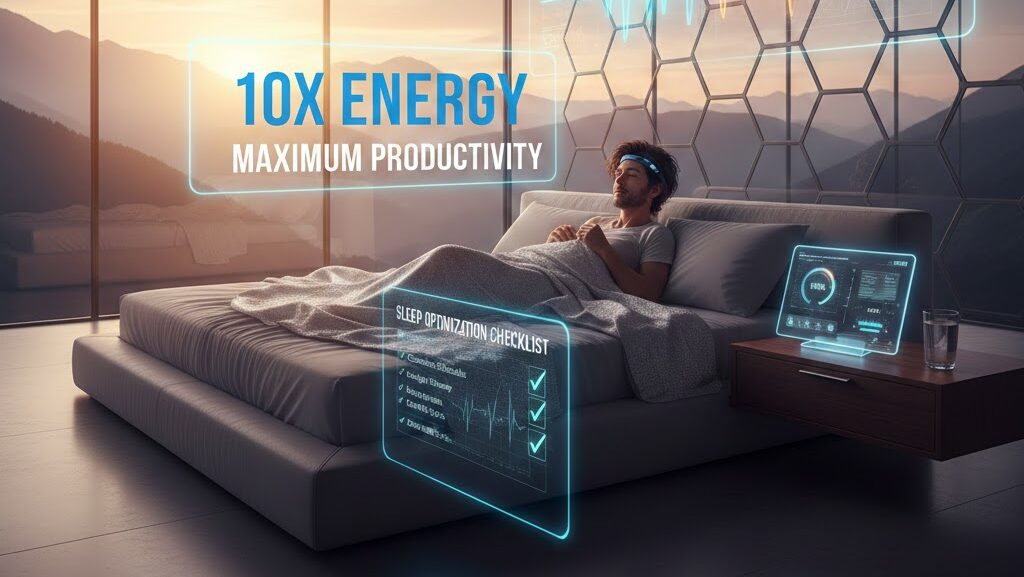
The Ultimate Guide to Biohacking Your Sleep for Maximum Productivity: Unlock 10x Your Energy Levels
Introduction: Why Biohacking Your Sleep is Your Ultimate Productivity Weapon
As someone who constantly seeks to optimize every aspect of my life, I’ve come to realize that no single factor impacts my productivity and overall well-being more than the quality of my sleep. For years, I struggled with inconsistent energy levels, brain fog, and the frustrating feeling of never quite reaching my full potential. I tried everything – more coffee, earlier mornings, even late-night pushes – but nothing truly worked until I started to apply the principles of biohacking your sleep. This isn’t just about getting eight hours; it’s about strategically optimizing your sleep environment and habits to unlock unprecedented levels of restorative rest, leading directly to a dramatic increase in your energy and focus.
If you’re tired of feeling perpetually exhausted, constantly battling the afternoon slump, or just want to significantly boost your daily output, then you’re in the right place. In this comprehensive guide, I’ll share the exact strategies I’ve personally used to transform my sleep and, in turn, my entire life. Get ready to dive deep into the science and practical application of optimizing your rest.
The Science Behind Why Quality Sleep Matters for Productivity
Before we jump into the “how,” let’s briefly understand the “why.” Your sleep isn’t just a passive state of rest; it’s an incredibly active period for your brain and body. During deep sleep, your brain literally cleanses itself, flushing out metabolic waste products that accumulate during waking hours. It also consolidates memories, processes information, and repairs tissues.
When you consistently get high-quality sleep, you’re not just feeling better; you’re operating at a higher cognitive level. My own experience has shown me that when I prioritize and actively work on biohacking your sleep, my decision-making improves, my creativity flows more freely, and I can tackle complex problems with greater ease. On the flip side, even a single night of poor sleep can impair judgment, reduce reaction time, and significantly dampen my mood and motivation.
7 Proven Strategies for Biohacking Your Sleep and Maximizing Your Day
Over my journey, I’ve experimented with countless techniques, and these seven strategies have consistently delivered the most profound results in truly biohacking your sleep for maximum impact.
1. Master Your Circadian Rhythm with Light Exposure
Your circadian rhythm, your internal 24-hour clock, is profoundly influenced by light. I’ve learned that consistent light exposure at the right times is paramount.
- Morning Light: The first thing I do every morning, ideally within 30 minutes of waking, is expose my eyes to natural sunlight for 10-15 minutes. This signals to my brain that the day has begun, suppressing melatonin production and boosting cortisol naturally. I often step outside or sit by a bright window.
- Evening Darkness: Conversely, as evening approaches, I drastically reduce my exposure to bright artificial light, especially blue light from screens. I wear blue light blocking glasses after sunset, and I use dim, warm-toned lights in my home. This allows my body to naturally begin producing melatonin, preparing me for sleep.
2. Optimize Your Sleep Environment for Deep Rest
Your bedroom should be a sanctuary for sleep. I’ve found that even small adjustments can make a huge difference in biohacking your sleep environment.
- Temperature: I keep my bedroom cool, typically between 65-68°F (18-20°C). A cooler environment helps to initiate and maintain sleep.
- Darkness: My bedroom is as dark as possible. I use blackout curtains to block out all external light. Even tiny pinpricks of light can disrupt melatonin production.
- Sound: I live in a city, so I rely on a white noise machine to mask any sudden or inconsistent noises that could wake me. Consistent, low-level white noise helps me drift off and stay asleep.
3. Cultivate a Consistent Sleep Schedule
This might seem obvious, but adhering to a strict sleep schedule, even on weekends, has been a game-changer for me. I go to bed and wake up at roughly the same time every day. This consistency reinforces my circadian rhythm, making it easier to fall asleep and wake up naturally. When I deviate, I can immediately feel the impact on my energy levels the next day. This is a core tenet of biohacking your sleep.
4. Fine-Tune Your Nutrition and Hydration
What and when you eat and drink significantly impacts your sleep quality. I’ve found that avoiding certain foods and optimizing others truly helps in biohacking your sleep.
- Caffeine Cut-off: I stop consuming caffeine by early afternoon, typically no later than 2 PM. Caffeine has a long half-life and can linger in your system, disrupting sleep hours later.
- Alcohol Awareness: While alcohol might initially make you feel sleepy, it fragments sleep and prevents you from reaching restorative deep REM cycles. I limit alcohol, especially in the evenings.
- Timing Meals: I aim to finish my last substantial meal at least 3 hours before bed. Digesting a heavy meal too close to bedtime can elevate core body temperature and cause discomfort.
- Magnesium Supplementation: I personally supplement with magnesium glycinate in the evenings. Magnesium is a natural muscle relaxant and can promote deeper sleep. (Always consult a doctor before starting new supplements.)
5. Embrace Stress Reduction and Mindfulness
Stress is sleep’s arch-nemesis. Learning to manage stress has been crucial in my journey to biohacking your sleep.
- Evening Wind-Down Routine: About an hour before bed, I engage in relaxing activities. This might include reading a physical book, taking a warm bath, or listening to calming music. I avoid any work-related tasks or intense discussions during this time.
- Meditation: A short 10-minute meditation before bed helps quiet my racing thoughts. There are many guided meditation apps available that can assist with this.
- Journaling: If my mind is buzzing with ideas or worries, I’ll often write them down in a journal. This helps to “dump” those thoughts from my head, allowing me to approach sleep with a clearer mind.
6. Leverage Technology (Smartly) for Sleep Tracking
While excessive screen time is detrimental, certain technologies can be powerful allies in biohacking your sleep. I use a wearable sleep tracker (like an Oura Ring or WHOOP strap) to gain objective data on my sleep quality.
- Data-Driven Insights: These devices track metrics like sleep stages (REM, deep, light), heart rate variability, and respiratory rate. This data allows me to identify patterns and understand what truly impacts my sleep for better or worse.
- Experimentation: With this data, I can experiment with different strategies (e.g., trying a new sleep supplement, adjusting bedroom temperature) and see their direct impact on my sleep scores. This personalized approach is key to effective biohacking your sleep.
7. Incorporate Strategic Napping (If Needed)
While a consistent nighttime sleep is paramount, I’ve found that strategic napping can sometimes be a powerful tool for boosting productivity, especially on days when I’m feeling particularly drained.
- Power Naps: I aim for short power naps, typically 20-30 minutes, usually in the early afternoon. This provides a quick energy boost without entering deep sleep, which can lead to grogginess.
- Timing is Key: Napping too late in the day can interfere with nighttime sleep. I avoid naps after 3 PM.
Quick Summary Checklist: Biohacking Your Sleep Essentials
For those of you on the go, here’s a quick checklist of the core strategies for truly biohacking your sleep:
- ✔️ Expose yourself to bright light in the morning.
- ✔️ Minimize blue light exposure after sunset.
- ✔️ Keep your bedroom cool, dark, and quiet.
- ✔️ Maintain a consistent sleep schedule, even on weekends.
- ✔️ Avoid caffeine and alcohol in the evening.
- ✔️ Finish heavy meals at least 3 hours before bed.
- ✔️ Implement a relaxing pre-sleep routine.
- ✔️ Consider magnesium supplementation (with doctor’s approval).
- ✔️ Track your sleep to gain insights and optimize.
- ✔️ Utilize strategic power naps if needed, but not too late.
Step-by-Step Action Guide: Your 7-Day Sleep Biohacking Plan
Ready to start biohacking your sleep right now? Here’s a simple 7-day plan to kickstart your journey.
- Day 1: Light Audit. Commit to 15 minutes of morning sunlight. After sunset, install f.lux or Night Shift on your devices and wear blue light glasses.
- Day 2: Environmental Overhaul. Optimize your bedroom: lower the thermostat to 67°F (19°C), ensure total darkness with blackout curtains, and try a white noise machine.
- Day 3: Schedule Lock-In. Choose a consistent bedtime and wake-up time for the next 7 days, and stick to it rigorously. Set an alarm for both.
- Day 4: Dietary Adjustments. Stop caffeine intake by 2 PM. Avoid alcohol. Eat your last meal at least 3 hours before bed.
- Day 5: Wind-Down Ritual. Create and commit to a 60-minute pre-sleep routine: warm shower, reading, light stretching, or meditation.
- Day 6: Introduce Magnesium. If comfortable and after consulting your doctor, take a magnesium glycinate supplement before bed.
- Day 7: Sleep Tracking Setup. Purchase or set up a sleep tracking app/device. Start collecting data to identify your unique patterns and areas for improvement.
Special Tip: The Power of Intentional Breathing
Beyond all the external factors, I’ve discovered the incredible power of my breath in preparing my body for sleep. Before drifting off, I often practice a simple box breathing technique: inhale for 4 counts, hold for 4, exhale for 4, hold for 4. Repeating this for just 5-10 minutes can significantly calm my nervous system, making it much easier to transition into a state of deep rest. It’s a free, powerful tool for biohacking your sleep from the inside out.
FAQ: Common Questions About Biohacking Your Sleep
Q1: How long does it take to see results from biohacking sleep?
A1: You might notice subtle improvements in energy and focus within a few days of implementing even one or two strategies. However, significant, lasting changes often take 2-4 weeks as your body adjusts to new rhythms and habits. Consistency is key for truly biohacking your sleep.
Q2: Is it okay to take natural sleep aids like melatonin?
A2: While melatonin can be helpful for jet lag or resetting your circadian rhythm temporarily, I generally prefer to encourage natural melatonin production through light exposure and environmental control. If you do use it, aim for the lowest effective dose (e.g., 0.5-1mg) and only for short periods. Always consult a healthcare professional before taking any supplements.
Q3: What if I wake up in the middle of the night?
A3: It’s normal to wake briefly. If you can’t fall back asleep within 15-20 minutes, don’t just lie there stressing. I get out of bed, go to a dimly lit room, read a physical book, or do some light stretching until I feel sleepy again. Avoid looking at clocks or screens.
Conclusion: Your Journey to Optimized Sleep Begins Now
Biohacking your sleep is not a luxury; it’s a fundamental pillar of peak performance, optimal health, and sustained well-being. My personal journey has shown me that by taking a strategic, data-driven approach to my rest, I’ve unlocked levels of energy and productivity I never thought possible. It’s an ongoing process of learning and refinement, but the rewards are immeasurable.
I encourage you to start with one or two of the strategies I’ve shared today. Implement them consistently, observe the changes, and gradually build your personalized sleep optimization plan. Remember, investing in your sleep is the smartest investment you can make in yourself.
To your best sleep and most productive days!
Warmly, Jay
If you enjoyed this post, you might also like: 7 Mind-Blowing K-Beauty Device Trends 2026: How I Achieved Clinical Results at Home (Proven Evidence)